2026's 'Jobless Growth' Crisis: How Early-Career Professionals Can Thrive
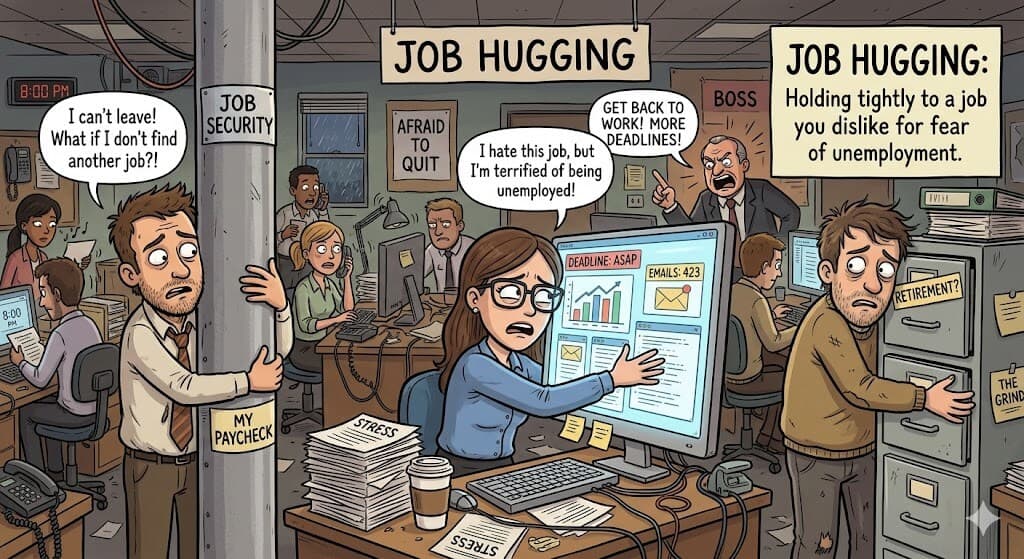
The shift toward "jobless growth" in the 2026 job market means company revenue increases without a major rise in headcount. This trend, powered by automation and AI, has eliminated many administrative jobs, making entry-level positions highly competitive. Instead of hiring based purely on degrees, top employers now focus on a "skills-first" approach, seeking a smaller, elite group of graduates who can manage and lead automated systems.
For you, this means your focus must be on developing adaptability, communication skills, problem-solving, and fluency with AI tools. If an organization is hiring a cohort of 1,000+ grads, they look for candidates who can immediately review workflows and drive innovation, rather than simply filling legacy roles.
The 3-Year ROI Mindset
Recognize that when an organization hires you, they view it as a critical 3-year investment, expecting a measurable ROI (Return on Investment). The goal is to develop you into a fully productive professional or strategic project manager by Year 3, ready to fill future leadership gaps. To ensure you stick around, leading organizations focus on structured support and retention. When evaluating potential employers, prioritize those with:
- Strong mentorship programs
- Cross-functional rotations
- Clear career trajectory with specific milestones
- Focus on mental wellbeing and transparency
Ultimately, your success depends on proving measurable value and leveraging your digital skills to create output higher than traditional entry-level expectations.
Expert Insights on Navigating Jobless Growth
We reached out to 43 hiring experts for their advice. Here are key takeaways:
- Dr. Nir Baharav emphasizes that talent management must foster a culture where change is seen as an opportunity for growth, providing psychological safety and tools to manage mental load.
- Amit Agrawal advises companies to move from volume-based hiring to enabling productivity, integrating early career hires into AI-driven workflows from day one.
- Gary Gray notes that with 140 candidates per position, organizations should focus on skills-based hiring and target expanding IT and AI teams.
- Anand Reddy K S recommends using AI tools to handle application piles, freeing up teams to mentor new hires.
- Lisa Clark highlights that mentoring and rotations improve retention when employees have a clear career trajectory.
- Runbo Li suggests betting on training and real projects to keep early career hires engaged.
- Tobias Burkhardt stresses the need for a real plan with specific milestones to keep graduates motivated.
- Andrew Yan advises tracking three-year results to see if training pays off.
- Itamar Haim treats training as a three-year investment, not a budget item.
- Emma Sansom warns that taking on large groups is dangerous without good training programs.
- Joseph Melara recommends asking new hires what they want early on.
- Cyrus Partow suggests tracking metrics like adoption rates during onboarding to find real contributors.
- Paul Jameson advocates hiring for ability, not experience, and maintaining university partnerships.
- Andrew Gazdecki emphasizes selling a future with flexible positions and clear goals.
- James Rigby highlights the importance of listening to feedback and improvising.
- Edward Piazza advises tracking junior hires better and investing in training.
- Miguel Salcido suggests updating careers sites to attract younger talent.
- Dr. Nick Palmer stresses real mentorship and clear paths for advancement.
- Max Marchione recommends starting with a small pilot group before scaling.
- John Turns automates screening and uses surveys to catch issues early.
- Ryan Doser uses AI to predict talent needs and track grad schemes.
- Ben Hathaway focuses on mentorship and real projects to keep juniors engaged.
- Matt von Boecklin emphasizes mental health support.
- Sean Chaudhary focuses on skills-based hiring and tracking three-year contributions.
- Richard Spanier automates onboarding with flexible training platforms.
- David Robbins uses department rotations to build confidence.
- Tiberiu Trandaburu advises hiring fewer but better-aligned graduates, with a 3-year ROI perspective: Year 1 = ramp up, Year 2 = partial productivity, Year 3 = full productivity.
- Saini Rhodes suggests using fresh hires to automate processes, enabling senior employees to focus on high-value work.
- Cody Schuiteboer warns that cutting grad programs weakens future leadership.
- Levon Gasparian highlights the regulatory environment and the need for structured rotational programs.
- Chris Groome advises graduates to keep growing skills even in non-ideal jobs.
- Brian Chasin pushes for hiring critical thinkers to lead automation.
- Darryl Stevens recommends building grad programs as digital incubators focused on adaptability and technology fluency.
- James Mikhail emphasizes protecting mental wellbeing with structured peer support.
- James Scribner stresses compliance and automated feedback loops.
- Joel Butterly suggests treating hiring as a continuous educational academy.
- Jonathan Orze focuses on wage arbitrage and tracking displaced consulting fees.
- Joshua Zeises advocates training in emotional intelligence to fill leadership voids.
- Ryan Hetrick emphasizes transparency and turning new hires into ambassadors.
- Sean Smith insists on ultra-structured quality control to avoid errors.
- Tzvi Heber promotes individualized development to avoid treating people as data points.
- Carl Dugan advises hands-on training from week one.
- Joosep Seitam highlights structured training and retention as key performance indicators.
Key Strategies for Early-Career Professionals
- Develop a skills-first portfolio: Focus on adaptability, communication, problem-solving, and AI fluency.
- Seek employers with structured support: Look for mentorship, rotations, and clear career paths.
- Prove measurable value: Use digital skills to drive innovation and efficiency.
- Prioritize mental wellbeing: Choose employers that offer transparency and support.
- Network and stay adaptable: In a competitive market, continuous learning is your best asset.
The decisions made in 2026 regarding early career talent will directly impact organizations in 2029. Staying the course with investments requires courage, but will position companies for strength when growth returns.
- #joblessgrowth
- #earlycareer
- #skills-firsthiring
- #aiautomation
- #careerstrategy
Comments · 0