Gen Z's Job Crisis: Why Entry-Level Roles Are Vanishing and How to Survive the AI Revolution

Imagine you're a 20-something member of Gen Z, searching for a job in today's climate. Job sites are flooded with openings, but few feel like the right fit. Interviews seem endless, yet rarely lead to real opportunities. AI looms as a growing obstacle, turning the job hunt into a stressful, uncertain journey.
"The job market at the entry level is, indeed, broken right now, and Gen Z is taking the hit the hardest," said Ian Skjervem, CEO of Smart Investors Daily.
Recent data paints a stark picture: the average new hire in 2025 was 42 years old, up from 40 in 2016, according to research by Revelio Labs. Meanwhile, employer hiring announcements fell by 34% in 2025. For those aged 22 or 23, career prospects appear bleak.
Melissa Elders, VP of Marketing for Artistry Restaurants, told The Food Institute that this market is "putting Gen Zers in a unique position unlike any generation before it."
"The issue isn’t that Gen Z employees aren’t willing to start at the bottom – the issue is there isn’t a bottom to start at anymore," said Eric Kingsley, partner at Kingsley Szamet Employment Lawyers.
How Did We Get Here?
Gen Z's hiring struggles stem from multiple factors. Older employees are working longer than ever before, driven by financial pressures like inflation pushing median U.S. home prices past $410,000. Skjervem notes that workers aged 65 and above have seen an almost 80% increase in hiring inflow between 2019 and 2025, creating a bottleneck for entry-level openings.
AI is making some entry-level jobs obsolete, and many businesses that are hiring often seek candidates with 2-5 years of prior experience. Craig Dunaway, COO of Penn Station East Coast Subs, explains, "Gen Zers new to the market are being squeezed by those who have some level of experience." Skjervem advises that Gen Z should expect this environment to persist for the next three to five years.
AI’s Impact on the Workforce
Business leaders are clear: artificial intelligence offers real, invaluable efficiencies. Elders states, "AI is here to stay, and it’s a great tool that allows businesses and industries of all types and sizes to work smarter."
Oisin Hanrahan, an AI expert and CEO, highlights a shift in employment expectations: "There’s a real shift that we’re on the edge of right now, which is a reimagining of what people are going to do for long-term employment." He urges workers to benchmark their skills against AI's potential, focusing on unique human aspects like discretion and value addition.
"The mistake is to think that AI is only going to do a small part of your job," Hanrahan added. "The more forward-leaning approach will be to assume that AI can do a lot of your job, and then figuring out what’s the percent that you’re going to do that’s truly unique."
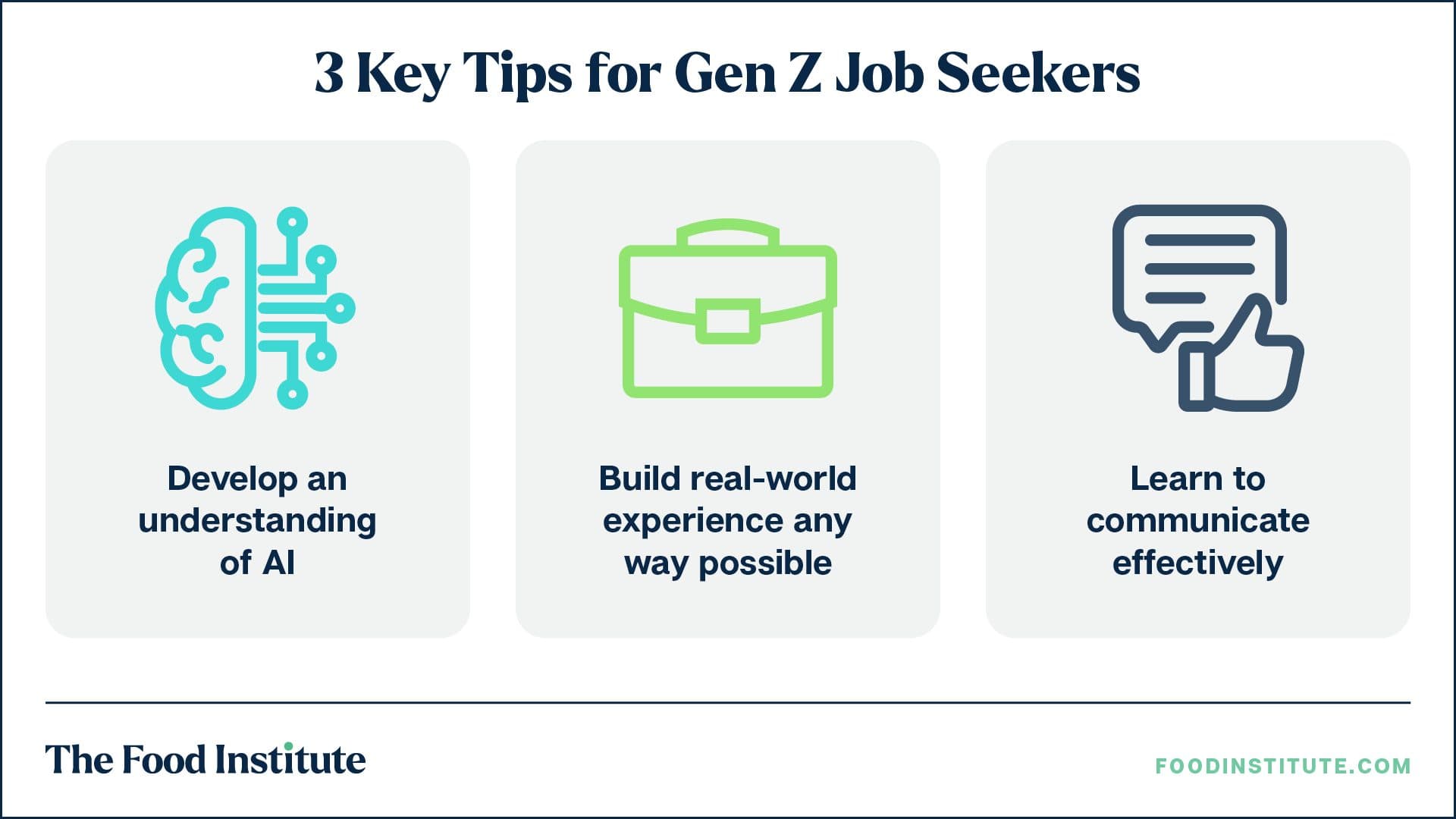
3 Key Tips for Gen Z Job Seekers
Industry experts nearly unanimously recommend these strategies for young job seekers in 2026:
- Build an understanding of AI – Familiarize yourself with how AI tools work and their applications in your field.
- Build real-world experience – Gain hands-on skills through internships, part-time jobs, certifications, or training programs.
- Learn to communicate effectively – Develop strong verbal and interpersonal skills to stand out in interviews and teamwork.
Dunaway emphasizes, "In business, communication is key, and you can’t simply hide behind a keyboard or smartphone to communicate." Elders adds that soft skills like empathy, problem-solving, and adaptability are crucial for hireability.
George Forrester, general manager of operations at Desky, advises viewing entry-level jobs as "skill laboratories" that build high-stakes problem-solving and emotional intelligence.
How Hirers Can Help
Businesses seeking entry-level talent should engage on social media platforms like TikTok, Instagram, and Discord to connect with young job seekers. Elders notes, "We regularly celebrate our team members on social media... telling stories more authentically about what it’s like to work at our restaurants."
Employers must also position entry-level roles as career launchpads, not just temporary jobs, to attract and retain motivated Gen Z workers.
- #genz
- #jobmarket
- #ai
- #careerdevelopment
- #entrylevel
Comments · 0