IBM's Bold Move: Tripling Entry-Level Jobs in the AI Era - Redefining Careers for the Future
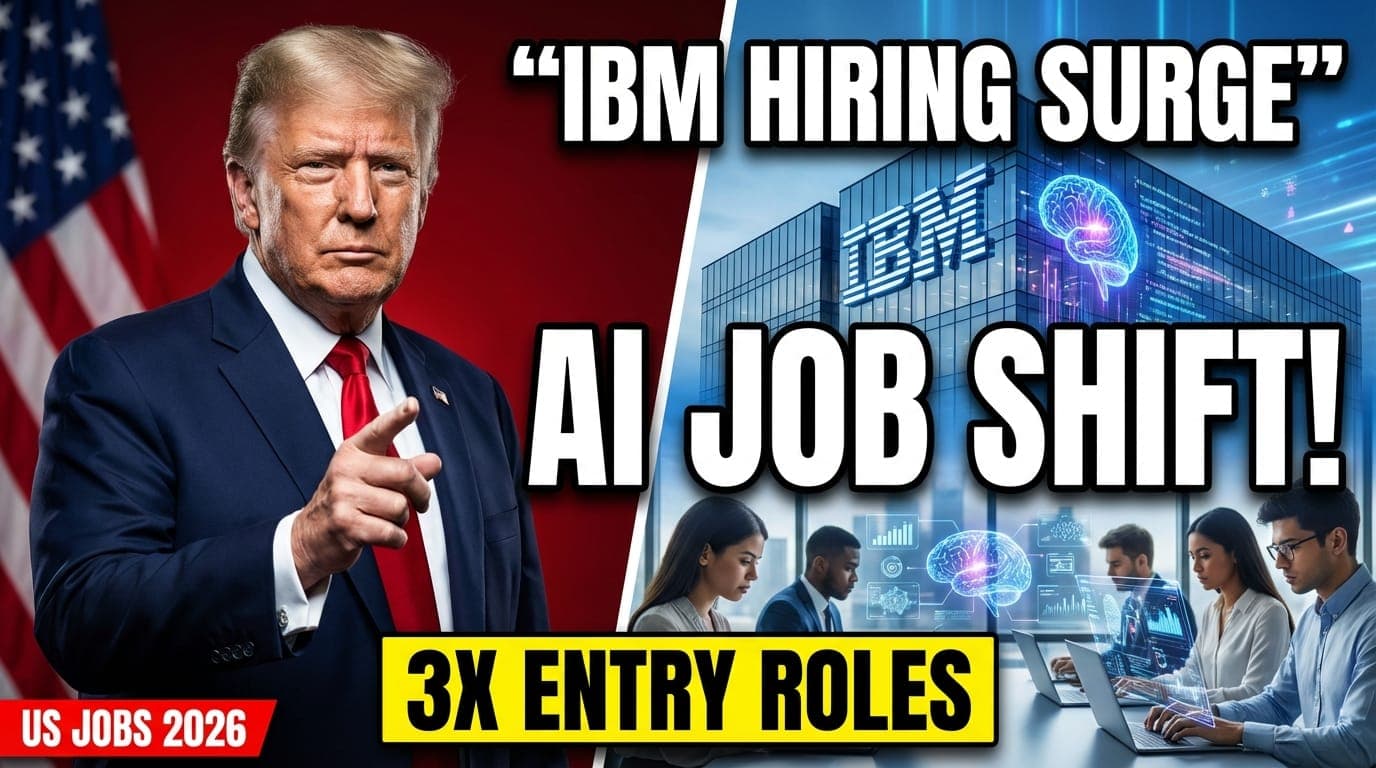
International Business Machines Corp. (IBM) has announced a groundbreaking plan to triple its entry-level hiring in the United States by 2026, marking a strategic shift as artificial intelligence reshapes the labor market. While specific numbers weren't disclosed, this increase will span multiple departments, signaling a commitment to junior talent despite widespread concerns about AI's impact on early-career roles.
Strategy: Redefining Junior Roles in an AI-Enabled Workplace
IBM's hiring expansion is a deliberate effort to reposition rather than eliminate entry-level positions. According to Nickle LaMoreaux, IBM's chief human resources officer, traditional job descriptions no longer reflect how work is performed today. With AI systems handling many tasks previously assigned to early-career employees, IBM has revised job descriptions—particularly for software developers—to emphasize responsibilities that complement AI rather than compete with it. This approach focuses on redesigning roles to highlight the continued value of human employees in an automated environment.
Redesign: How Daily Responsibilities Are Changing
The restructuring has led to measurable shifts in daily tasks for junior staff. For example, AI tools now manage routine coding that entry-level software developers once handled. Instead of writing basic code, junior developers now spend more time collaborating with clients, interpreting technical needs, and refining AI-generated outputs.
In human resources, entry-level employees are no longer bogged down by answering every internal query. HR chatbots handle standard questions, while junior staff step in to resolve escalated issues, review chatbot accuracy, and communicate directly with managers when needed.
This realignment of tasks can be summarized as follows:
| Traditional Entry-Level Duties | AI-Era Responsibilities | |--------------------------------|--------------------------| | Routine coding | Client interaction and solution refinement | | Manual HR inquiries | Chatbot oversight and escalation management | | Basic data processing | Interpretation and quality control |
Rather than cutting positions, IBM is reallocating human effort toward areas requiring judgment, communication, and contextual understanding.
Market Context: AI's Impact on Early-Career Employment
IBM's announcement comes amid uncertainty for early-career jobs, with some industry leaders predicting significant displacement in entry-level roles due to AI advances. College graduates have expressed anxiety about long-term prospects in an AI-driven economy. However, IBM views AI not as a replacement tool but as an augmentation system that restructures work, offering a different perspective on automation's role.
Pipeline: Investing in Long-Term Talent Sustainability
LaMoreaux emphasized that reducing early-career hiring might save costs short-term but could lead to long-term talent shortages and leadership gaps. Hiring externally to fill mid-level roles is often costlier and less efficient than developing internal talent. IBM's strategy prioritizes long-term workforce sustainability over immediate cost reduction, as shown in this pipeline model:
| Approach | Short-Term Impact | Long-Term Impact | |----------|-------------------|------------------| | Reduce entry hiring | Lower immediate costs | Potential leadership gaps | | Invest in juniors | Higher near-term spending | Stronger internal talent pipeline |
Industry Trends: Other Firms Following Suit
Other technology companies are adopting similar strategies. For instance, Dropbox plans to expand its internship and new graduate hiring by 25%, citing the adaptability and AI fluency of younger workers as key factors. Some executives argue that early-career professionals, having grown up with digital tools, may integrate AI more naturally and drive innovation during technological transitions.
Outlook: Evolving Employment in the AI Era
IBM's decision to triple entry-level hiring reflects a broader recalibration of workforce strategy. By shifting routine tasks to AI and emphasizing collaboration, oversight, and client engagement, IBM aims to maintain the relevance of early-career employees while strengthening its talent pipeline. As AI continues to influence labor markets, corporate strategies may increasingly focus on redesigning work instead of reducing headcount, suggesting that entry-level employment can evolve alongside automation rather than disappear because of it.
- #ibm
- #ai
- #entryleveljobs
- #careerdevelopment
- #futureofwork
Comments · 0