Is AI Stealing Your First Job? The Shocking Truth About Gen Z's Career Crisis
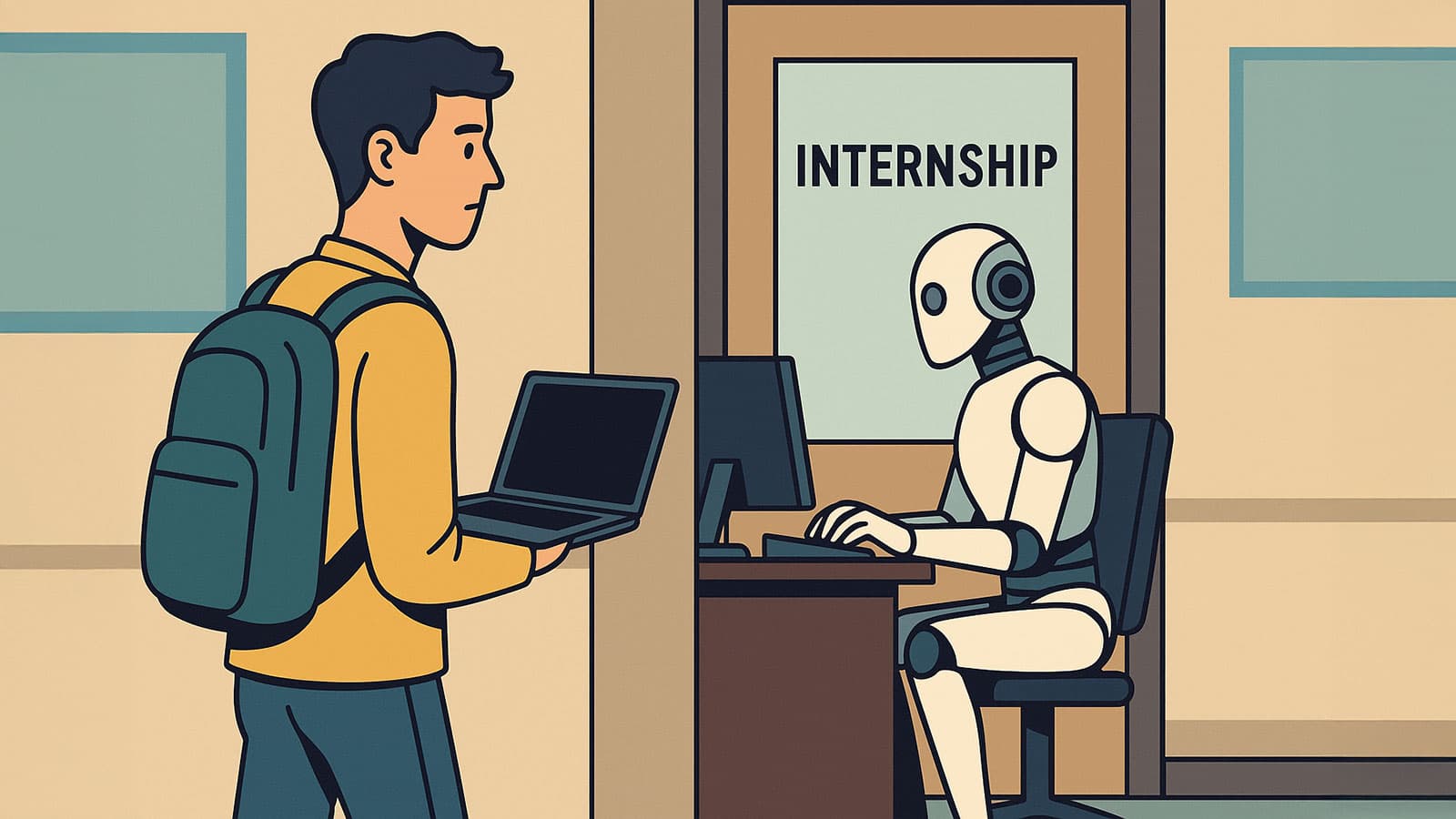
AI is Reshaping Entry-Level Jobs and Internships
For years, the phrase "the robot took my job" evoked images of machines replacing factory workers. But now, Gen Z is confronting a new reality: the loss of internships and entry-level positions to artificial intelligence (AI).
Internships and junior roles have long served as a predictable ladder into the workforce, providing essential experience and skills for career growth. However, as AI infiltrates every aspect of the modern workplace, these roles are increasingly vulnerable to automation.
Entry-level jobs typically involve low-complexity, high-frequency tasks like data entry, scheduling, or report drafting—tasks that generative AI can perform more cheaply and efficiently than humans. This trend suggests fewer traditional starting points on the career ladder.
We're already witnessing the impact: entry-level positions are becoming scarcer, with candidates facing a 14% increase in applications per role, according to LinkedIn.
AI is Changing the Workplace
The integration of AI across industries is fundamentally transforming the job market. Nearly half of professionals fear AI will replace their jobs, and for good reason—by 2030, an estimated 30% of work could be automated by generative AI.
Meanwhile, nearly two-thirds of executives admit they're willing to use AI tools to boost productivity, even if it means reducing staff. In contrast, only one in three prioritize retaining employees over productivity gains.
Projections indicate that declines in traditional entry-level roles in sectors such as food services, customer service, sales, and office support could account for nearly 84% of occupational shifts by 2030.
Talent and Entry-Level Role Shortages in the Future
Data on AI and the future of work also highlights a potential talent shortage for specific skill sets. A 2024 report from Microsoft and LinkedIn reveals that leaders are concerned about shortages in areas like cybersecurity, engineering, and creative design.
This might seem contradictory, but it signals not only fewer entry-level positions but also evolving job roles and skill requirements. Competition for these roles is expected to intensify, with greater emphasis on candidates who can leverage AI tools to enhance productivity and effectiveness.
Rather than simply eliminating jobs, many roles are adapting to require new capabilities. There's growing demand for specialized talent where AI cannot yet fully augment human abilities.
AI Literacy is the New Entry Requirement
As AI becomes more pervasive, entry-level roles are no longer just about basic tasks; they're about knowing how to work effectively with new technologies, including AI.
Employers are placing immense value on AI literacy. Two-thirds of managers say they wouldn't hire someone without AI skills, and 71% prefer a less experienced candidate with AI skills over a more experienced one without them.
With fewer entry-level positions available, young workers must find ways to stand out in a competitive job market. Fortunately, Gen Z may be best positioned to adapt. As digital natives, 85% are already integrating AI tools like ChatGPT or Copilot into their work, showing comfort and eagerness with the technology.
This mirrors broader trends: 76% of professionals believe they need AI-related skills to stay competitive, and there's been a 160% surge in learning courses for AI literacy. This shift is part of a larger move toward "upskilling"—enhancing skills to adapt to the changing job market, which now includes learning to use AI to boost workplace performance.
A New Kind of Entry-Level Job
Since AI literacy is becoming a core career skill, presenting yourself as a candidate with AI skills is crucial for standing out. This involves knowing how to use AI tools, critically evaluate their outputs, and apply them in a workplace context, as well as showcasing these skills on resumes and in interviews.
Employers also have a role to play. To attract and retain employees, they need to redesign entry-level roles, focusing on higher-value activities that require critical thinking or creativity—areas where humans excel and AI can support rather than replace.
This requires re-evaluating hiring practices to prioritize AI literacy and transferable skills over outdated experience requirements. The future of work isn't about humans being replaced by robots but about leveraging technology to enhance skills and create new entry points into the professional world.
- #ai
- #genz
- #internships
- #jobmarket
- #upskilling
Comments · 0